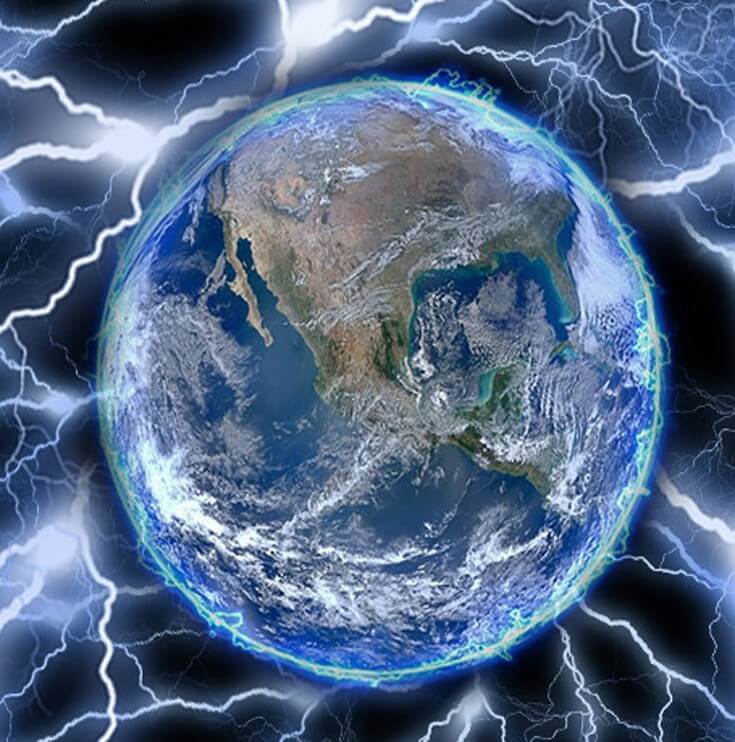

Researchers develop a brick made largely from recycled Dead Sea salt—offering a potential alternative to carbon-intensive cement.
The post Earth building with Dead Sea salt bricks appeared first on Green Prophet.
In the shimmering heat of the world’s great deserts, from Saudi Arabia’s Rub’ al Khali (the Empty Quarter) to the sands outside Abu Dhabi, lies a paradox. These landscapes bask in uninterrupted sunshine yet remain under-leveraged in the global renewable economy. The stumbling blocks to starting solar projects are rarely physical: the sun blazes. The hurdles are administrative, financial, and usually bureaucratic. As we’ve learned from Ipanema some 80-90% of renewable projects fail due to unforeseen, high grid connection costs, which Astro’s AI identifies upfront.
The company secures grid interconnection agreements, then sells these de-risked, shovel-ready projects to larger energy companies who can immediately start construction.
How? Astro, based in Silicon Valley uses artificial intelligence to map, acquire, and ready land for utility-scale clean energy build-out, then sell these “plug-and-play” sites to developers hungry for opportunity but infuriated by paperwork.
Astro’s pitch sounds almost too simple to be disruptive because if the biggest barrier to solar and wind isn’t physics but red tape, what if you solved the red tape first? The company’s machine-learning models ingest satellite imagery, grid maps, land-use data, and localized weather forecasts to pinpoint parcels that are ideal for renewables — not just sunny or windy, but grid-connectable, low-conflict, and low-cost.
Once a site is selected, Astro negotiates land access, coordinates environmental assessments, and aligns utility interconnection agreements, all the elements that typically take years.
For oil-rich, environmentally vigilant Gulf states, this isn’t just another startup story. It is a blueprint for accelerating an energy transition that is now existential, not optional. Regionally, governments have set ambitious targets such Saudi Arabia’s Vision 2030 (which is most likely going to fail from poor planning and the dropping cost of oil) and the UAE’s Net Zero by 2050 strategy among them — but the execution often collides with an analog world of forms, approvals, and human inertia. Astro’s model turns that world digital, algorithmic, and fast.
Now imagine applying Astro-style intelligence to water resources, wind energy, and even remediation of damaged lands. They could help us map out where to put greenhouses and towns of the future. They can plan cities not based on a feeling but on opportunities.
In arid environments, the scarcity of freshwater supplies is as pressing as the need for clean power. By layering hydrological data onto the same AI platform that identifies prime solar sites, planners could locate aquifer recharge zones, optimize placement for desalination projects powered by renewables, and reduce the energy footprint of water distribution.
Wind isn’t far behind. Coastal zones of the Arabian Gulf and the Red Sea present compelling offshore and onshore wind potential. The same technology that pinpoints grid access for solar can model turbine wakes and logistics corridors, dramatically shortening the time from concept to construction.
And then there’s the elephant in the room: the environmental damage left in the wake of fossil extraction. You don’t have to look far for a cautionary tale — the soil and water crises around Basra’s oil fields which we wrote about last month, have made headlines and sickened communities. While Astro doesn’t sell cleanup services, the implication of its approach is clear: when you can map the viability of a clean project with precision, you can also map the liabilities. That opens the door for investors and sovereign wealth funds to bundle renewable investment with environmental remediation in blended finance vehicles.
Astro is founded by Alex Fuster. He is a Stanford-trained physicist and computer scientist and former energy trader at Citadel, he built Astro after seeing how predictable grid congestion data is overlooked by traditional developers. Astro is part of Y Combinator and is starting business development in Texas. Astro Energy closed a pre-seed funding round of about $500 K in April 2025, with participation from Y Combinator.
The post Astro uses AI to help procure land for renewable energy appeared first on Green Prophet.
Recommended Story For You :

Bringing Dead Batteries Back To Life Is Simple!
SEPTIFIX to the Rescue! Say Goodbye to Problems and Hello to Savings

Ecomposing of Paper Towels Produce Methane Gas

A Leading Cause Of Global Warming!
A cleaner world where energy is abundant essentially free
and sourced directly out of the inherent power of the space surrounding us.

MIT Discovery can cut power bills by 65%

Easy DIY Power Plan Will Change Our World Forever

Discover the World with Our Passionate Geography Teacher in Memphis!